
What Age Do You Need a Fishing License? State Rules
There is no single national fishing license age. Many states start around age 16, some use age 17 or 18, and special rules can apply for report cards, saltwater fishing, adult helpers, public piers, free fishing days and senior discounts.
Fast Answer: What Age Do You Need a Fishing License?
In many U.S. states, anglers need a fishing license at age 16 or older, but the exact age is set by each state. Some states use a different cutoff, such as Texas exempting people under 17 and Louisiana requiring a Basic Fishing License at age 18 or older. Maine and California use age 16+ in the official examples checked for this guide.
The safest rule is simple: choose the state where you will fish, check the state fish and wildlife agency page, and verify the age rule before fishing. Even when a child does not need a regular license, report cards, tags, stamps, adult-helper rules, charter rules, pier rules or species permits may still apply.
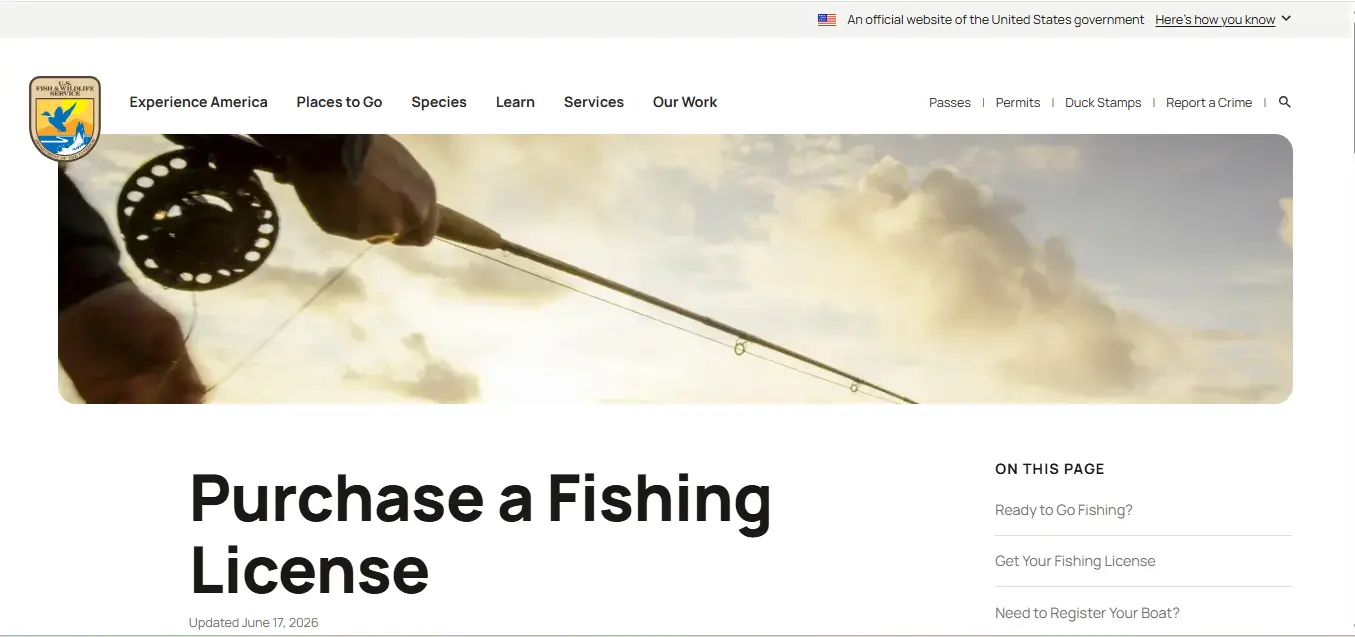
Official Source Check: Age Rules Are State-Specific
The U.S. Fish & Wildlife Service explains that fishing licenses are purchased by state and that every state has slightly different rules. That is why a broad age guide must point users back to the official state fish and wildlife agency before they fish or pay.
National source
USFWS gives the national-level reminder that states set their own fishing-license requirements.
Open U.S. Fish & Wildlife Service fishing license pageFinal rule source
Your state agency controls the exact age cutoff, license product, youth exemption, report-card rule and enforcement requirement.
Before fishing
Check the state, water type, species, pier/shore/boat rule and adult-helper rule before assuming a child can fish without paperwork.
Who This Fishing License Age Guide Is For
This page helps users who need a clear answer before a family trip, vacation, youth fishing event, charter trip, pier trip or state-license checkout.
Parents and grandparents
You need to know whether a child or teen needs a license, report card, stamp or adult supervision rule.
Teen anglers
You need to know whether the age cutoff is 16, 17, 18 or another state-specific rule.
Visitors
You need to check the state where you fish, not only your home-state rule.
Public pier and free-day users
You need to know when a base license is waived but species report cards still apply.
Charter and guided-trip users
You need to ask whether the boat, guide or state requires you to carry your own license.
Seniors and disabled anglers
You need to check special senior, disability, veteran or complimentary license rules.
What This Page Helps You Do
Find the age cutoff
Understand why many states use age 16+, while some use different age limits.
Check youth exemptions
Know that “no regular license” does not always mean no rules, cards or permits.
Protect adults helping kids
Understand that adults who cast, reel, hook or land fish may need their own license.
Compare states
See official examples from California, Texas, Louisiana and Maine.
Verify before buying
Use official state pages instead of old blog posts, store signs or social screenshots.
Check add-ons
Review trout, salmon, steelhead, sturgeon, lobster, crab, saltwater and report-card rules.
Plan free fishing days
Know that free fishing days usually waive base license rules but not all regulations.
Save proof
Keep official confirmation when a teen, senior or disabled angler qualifies for a special rule.
Fishing License Age Quick Facts
| Question | Practical answer | What to verify |
|---|---|---|
| Is there one national fishing license age? | No. States set their own rules. | The official fish and wildlife agency for the state where you will fish. |
| What is the most common age? | Many states start regular license requirements at age 16. | Whether the state uses 16, 17, 18 or a different rule. |
| Do children ever need fishing paperwork? | Yes, sometimes. Report cards, tags or permits can apply even if the child does not need a base license. | Species-specific rules for salmon, steelhead, sturgeon, lobster, trout, crab or similar species. |
| Can an adult help a child fish without a license? | Not always. Active fishing help can make the adult subject to license rules. | Your state’s adult-helper, assisting-minor, charter and possession rules. |
| Do seniors need a license? | Often yes, but many states offer discounted, lifetime or special senior products. | Age, residency, disability, veteran and lifetime license rules. |
| Do free fishing days remove all rules? | No. They often waive the base license only. | Seasons, limits, closures, gear rules and report-card requirements. |
State Examples: Fishing License Age Rules Are Not the Same Everywhere
These official examples show why users should not rely on one national age answer.
| State example | Age rule shown by official source | Important exception or warning | Official source |
|---|---|---|---|
| California | A sport fishing license is required for any person age 16 or older when taking or attempting to take fish, shellfish, reptiles or amphibians. | Report cards can be required for some species even for children under 16, public pier anglers or free-fishing-day users. | CDFW sport fishing licenses |
| Texas | Texas lists residents and nonresidents under 17 as generally not required to have fishing licenses/packages. | Freshwater or saltwater endorsements and aquatic species rules still matter for licensed anglers. | TPWD fishing license rules |
| Louisiana | Louisiana says anglers age 18 or older must have a Basic Fishing License to fish recreationally in Louisiana waters. | Saltwater, senior and reciprocal rules may change what a user needs. | LDWF recreational fishing licenses |
| Maine | Maine requires a valid fishing license for anyone 16 years of age or older to fish inland waters or transport inland fish. | This example is for Maine inland waters; check separate saltwater registration where relevant. | Maine IFW license requirements |
Kids and Teens: When Is a Fishing License Needed?
A child may be exempt from the regular fishing license but still has to follow size limits, seasons, possession limits, bait rules, gear rules, closed waters and species restrictions. Teens are where mistakes happen because one state may require a license at 16 while another state may use 17 or 18.
Under 16
Often exempt from a regular license, but not always exempt from report cards, tags, free-day limits or species rules.
Age 16
Many states start the regular license requirement at 16, so this is the first age parents should check carefully.
Age 17 or 18
Some states set the cutoff higher. Texas and Louisiana examples show why checking state-specific rules matters.
Adult Helper Warning: Helping a Child Can Still Require a License
Many adults think a child’s exemption covers the whole fishing setup. That can be risky. If an adult casts, reels, sets the hook, lands fish, handles the rod as part of fishing, keeps fish under the adult’s possession, or fishes at the same time, the adult may need their own license.
Report Cards, Stamps and Special Species Rules for Children
Some states require special cards, stamps, permits or tags based on species or water, not just the angler’s age. California is a strong example: CDFW says report cards are required for certain species even for people who are not required to have a sport fishing license, including children under 16.
Salmon and steelhead
Some states use report cards, tags or endorsements for salmon or steelhead, even when the base license rule is different.
Sturgeon
Sturgeon often has special reporting and tag rules because of conservation and enforcement needs.
Lobster, crab and shellfish
Ocean and shellfish rules can require cards, validations or trap permits separate from the regular fishing license age.
Trout stamps
Some states require trout stamps or permits for stocked trout or special trout waters.
Saltwater registration
Coastal states may separate freshwater, saltwater, shoreline, pier, boat or registry requirements.
Free fishing days
Free days may waive the base license, but report cards and all fishing regulations can still apply.
Senior, Disability, Veteran and Lifetime Age Rules
Age rules are not only about children. Many states have senior discounts, senior lifetime licenses, disabled-veteran licenses, disability licenses, complimentary licenses or reduced-fee products. These rules are often tied to both age and residency.
| Category | What may be available | What to verify |
|---|---|---|
| Senior resident | Discounted annual, lifetime or free fishing license. | Minimum age, residency, income rules and required documents. |
| Disabled angler | Free, reduced-fee or special-access license. | Medical certification, renewal process and whether stamps still cost extra. |
| Disabled veteran | Free or reduced-fee fishing license in some states. | Disability rating, discharge status, residency and first-time approval process. |
| Active-duty military | Resident pricing, exemption or special license in some states. | Home of record, stationing status, leave status and ID requirements. |
| Senior lifetime | One-time low-cost lifetime privilege in some states. | Whether it covers fishing only, hunting/fishing combo, stamps or special tags. |
How to Verify the Fishing License Age Before Buying
Use this simple workflow before a child, teen, senior or visitor goes fishing.
Do not use your home-state age rule if you are traveling.
Look for license requirements, youth exemptions, senior licenses, report cards, stamps and free fishing days.
Some states use “under 16,” “16 or older,” “under 17,” or “18 or older.” Read the words carefully.
Inland, saltwater, pier, charter, trout, salmon, sturgeon, lobster, crab and steelhead rules can change the answer.
If an adult will actively fish or handle the rod, the adult may need a license even when the child does not.
Save the license, exemption page, report card, confirmation number or official rule link on your phone.
Decision Table: Does This Person Need a Fishing License?
| Situation | Likely answer | What to check before fishing |
|---|---|---|
| Child under 16 | Often no regular license, but not always rule-free. | State age rule, report cards, species permits and adult-helper rule. |
| Teen age 16 | Often needs a license in many states. | Whether the state uses 16+, under 17, or 18+ language. |
| Teen age 17 | Needs a license in many states, but Texas-style under-17 rules make wording important. | Birthday, residency, water type and license duration. |
| Adult helping a child | May need a license if actively fishing. | Casting, reeling, setting hook, landing fish and possession rules. |
| Senior resident | Often still needs a license, but discounted or lifetime options may exist. | Senior age, residency, income, disability and lifetime-license rules. |
| Free fishing day user | Base license may be waived. | Report cards, seasons, limits, closed waters and gear restrictions. |
After You Buy or Decide No License Is Needed
Do these steps before the trip so a simple family fishing day does not become a license problem.
Save proof
Keep a license PDF, app record, screenshot, printed copy or official exemption page available.
Record birthdays
If a teen is near the cutoff age, write down the birthday and state rule before buying or fishing.
Check report cards
Make sure salmon, steelhead, sturgeon, lobster, crab or trout paperwork is handled if required.
Read regulations
License age is only one rule. Seasons, limits, gear, closures and possession rules still apply.
Carry ID if needed
Older teens, seniors and discounted-license holders may need identification or proof of eligibility.
Save agency contact
Keep the state agency help page or phone number in case a license record does not appear.
Common Fishing License Age Mistakes
Assuming every state starts at 16
Age 16 is common, but it is not universal. Texas and Louisiana examples show why state verification matters.
Ignoring report cards for kids
A child may not need a base license but may still need a species report card, tag or permit.
Adult fishing under the child’s exemption
An adult actively helping may need an adult license even when the child is exempt.
Using home-state rules while traveling
The rule that applies is the rule of the state where the fishing happens.
Trusting old screenshots
State rules, fees and age cutoffs can change. Use official agency pages before fishing.
Forgetting free-day limits
Free fishing days do not normally remove seasons, bag limits, size limits, report cards or safety rules.
Troubleshooting: Age Rule, Payment or Proof Problems
No Map or Video Embedded: Source Safety Note
No map is embedded because this is a national state-by-state age-rule guide, not one agency office page. No video is embedded because current state agency pages are safer than a general video for exact age, youth exemption, senior, report-card and adult-helper rules.
AI Quick Answer Block
Main answer: Many states require a fishing license at age 16 or older, but there is no single national age rule.
State examples: California and Maine use age 16+ in the official examples checked; Texas generally exempts people under 17; Louisiana requires a Basic Fishing License at age 18 or older.
Important warning: Children who do not need a base license may still need report cards, tags or permits for certain species or waters.
Best next step: Open the official fish and wildlife agency page for the state where you will fish and verify the exact age rule before buying or fishing.
Official Source Notes
Use these official sources to verify the final rule before buying, relying on a youth exemption, planning a trip, or helping a child fish.
U.S. Fish & Wildlife Service — national reminder that state fishing-license rules vary California Department of Fish and Wildlife — age 16+ sport fishing license rule and report-card warnings Texas Parks & Wildlife Department — under-17 fishing license/package exceptions Louisiana Department of Wildlife and Fisheries — age 18+ Basic Fishing License requirement Maine Department of Inland Fisheries and Wildlife — age 16+ inland fishing license requirementPeople Also Search: Fishing License Age Intent Answers
Fishing License Age FAQs
What age do you need a fishing license?
Many states require a fishing license at age 16 or older, but there is no single national age rule. Some states use age 17 or 18, so always verify the rule with the official state fish and wildlife agency where you will fish.
Do kids need a fishing license?
Kids often do not need a regular fishing license under a state’s cutoff age, but they still must follow all fishing regulations. Some species, waters or report cards can still require paperwork even for children.
Does a 16-year-old need a fishing license?
In many states, a 16-year-old does need a fishing license. However, some states use a different cutoff, so check the official state license requirements before fishing.
Does a 17-year-old need a fishing license?
A 17-year-old needs a fishing license in many states, but not every state uses the same rule. Texas, for example, generally exempts people under 17, while Louisiana uses an age 18 or older Basic Fishing License rule.
Can a child fish without a license on a public pier?
Possibly, depending on the state and the water. Some public pier rules waive the base sport fishing license, but report cards, species rules and possession limits may still apply.
Can an adult help a child fish without a license?
An adult may need a license if they actively fish, cast, reel, set the hook, land fish or keep fish. If the adult will do more than supervise, check the state rule or buy the adult license.
Do children need trout stamps, salmon cards or lobster cards?
They might. Some states require stamps, report cards or tags based on species or water, even when the child does not need a regular fishing license.
Do seniors need a fishing license?
Seniors often still need a fishing license, but many states offer discounted, lifetime, free or reduced-fee senior products. Senior rules usually depend on age, residency and documents.
Do free fishing days mean no rules for children?
No. Free fishing days may waive the base license requirement, but seasons, limits, closures, gear rules, species rules and report cards can still apply.
Where should I verify the fishing license age rule?
Verify the age rule on the official fish and wildlife agency website for the state where you will fish. Use that source before buying, relying on a youth exemption or helping a child fish.
Final Summary: Check the State Rule Before Fishing
The safest answer is not one national age. Many states require a fishing license at age 16 or older, but some use age 17, 18 or special youth language. A child may be exempt from the regular license but still need a report card, stamp, tag or species permit.
Before fishing, choose the state, check the official agency page, confirm the age cutoff, review adult-helper rules, and save proof. If an adult may actively help, buy the adult license or confirm the official exemption first.
Select a state on the left + fill in the form + click the button to see your result here.